

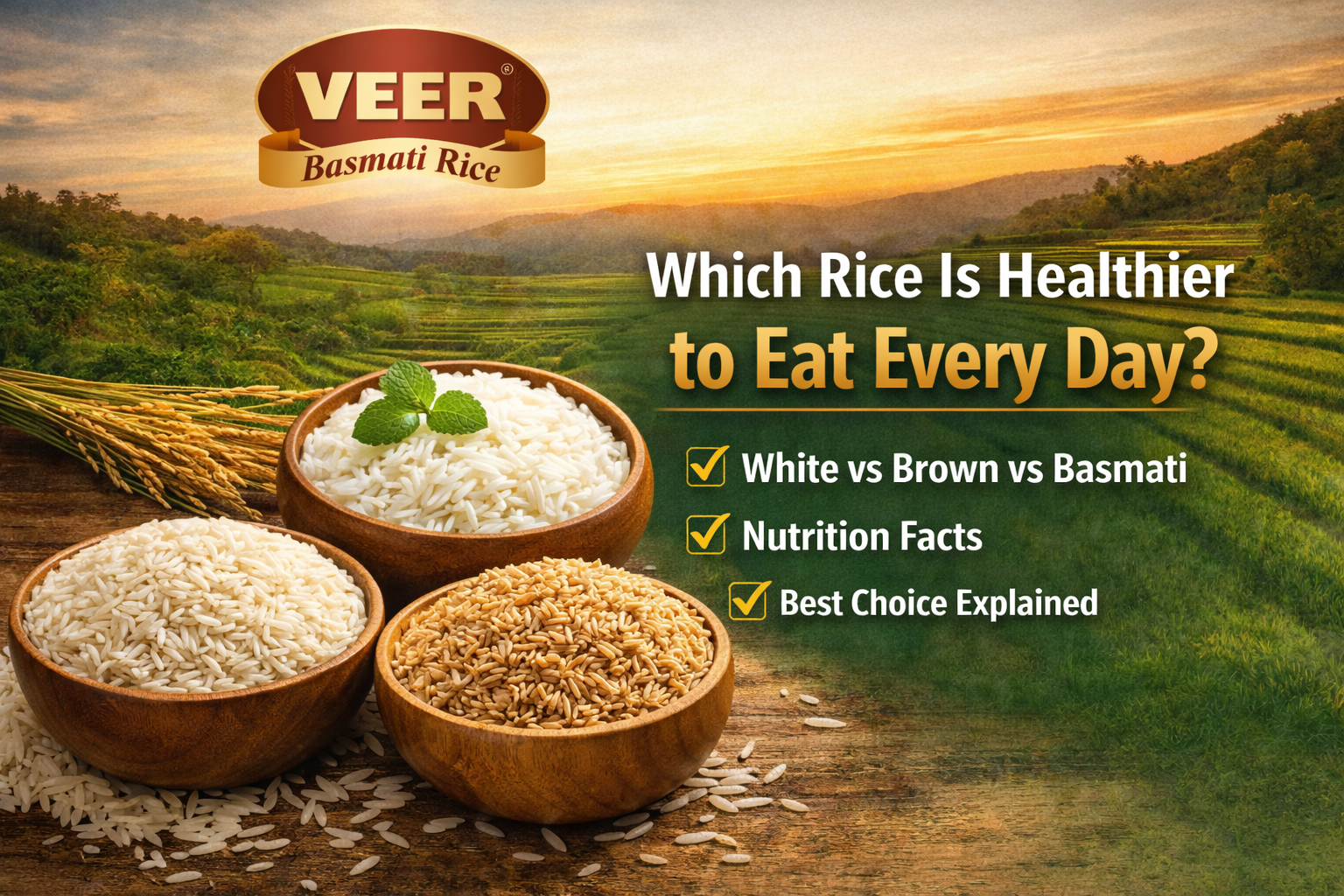
Rice is a daily staple food for millions of people across the world, especially in India. But with so many options available—white rice, brown rice, basmati rice, red rice, and more—the biggest question remains: which rice is healthier to eat every day?
In this blog, we break down the health benefits, nutritional differences, digestion impact, and expert-backed facts to help you choose the best rice for daily consumption based on your lifestyle and health goals.
Why Choosing the Right Rice Matters
Since rice is often eaten once or even twice a day, the type of rice you choose can directly affect:
-
Blood sugar levels
-
Digestion & gut health
-
Energy levels
-
Weight management
-
Long-term metabolic health
Not all rice varieties affect the body in the same way, making it important to choose wisely.
Common Types of Rice Consumed Daily
Here are the most commonly eaten rice varieties:
-
White Rice
-
Brown Rice
-
Basmati Rice
-
Red Rice
-
Parboiled Rice
Each has its own nutritional profile and health impact.
Nutritional Comparison of Popular Rice Types
| Nutrient (per 100g cooked) | White Rice | Brown Rice | Basmati Rice |
|---|---|---|---|
| Calories | 130 | 123 | 121 |
| Carbohydrates | 28g | 25g | 25g |
| Protein | 2.7g | 2.6g | 3.5g |
| Fiber | 0.4g | 1.8g | 1.0g |
| Glycemic Index | High | Medium | Low |
| Magnesium | Low | High | Moderate |
Which Rice Is Healthier to Eat Every Day?
1. Basmati Rice – Best Overall Choice
Basmati rice is widely considered the healthiest rice for daily consumption, especially when compared to regular white rice.
Benefits:
-
Naturally low glycemic index, better for blood sugar control
-
Easy to digest
-
Aromatic and flavorful, requires less oil or ghee
-
Higher protein compared to regular white rice
Best for:
✔ Daily meals
✔ Diabetics
✔ Weight management
✔ Active lifestyle
2. Brown Rice – High Fiber but Not for Everyone
Brown rice is a whole grain and contains bran and germ layers, making it rich in fiber.
Benefits:
-
High fiber aids digestion
-
Rich in magnesium and antioxidants
-
Keeps you full for longer
Limitations:
-
Harder to digest for some people
-
Can cause bloating if eaten daily
-
Contains phytic acid which may reduce mineral absorption
Best for:
✔ Weight loss diets
✔ People with strong digestion
3. White Rice – Easy to Digest but Less Nutritious
White rice is highly refined and widely consumed.
Benefits:
-
Very easy to digest
-
Suitable during illness or digestive issues
Drawbacks:
-
High glycemic index
-
Low fiber and micronutrients
-
Can spike blood sugar when eaten daily
Best for:
✔ Occasional consumption
✔ People with sensitive digestion
Expert Opinion on Daily Rice Consumption
Nutritionists generally recommend low GI, easily digestible rice for daily eating. According to dietary experts, basmati rice stands out as the best balance of nutrition, digestion, and blood sugar control when consumed regularly.
Eating rice in controlled portions along with protein, vegetables, and healthy fats further improves its health benefits.
Which Rice Should You Avoid Eating Daily?
-
Highly polished white rice
-
Instant or flavored rice varieties
-
Over-processed packaged rice
These options may lead to frequent blood sugar spikes and nutrient imbalance if consumed daily.
Tips to Make Rice Healthier for Daily Meals
-
Prefer basmati or parboiled rice
-
Avoid overcooking
-
Pair rice with dal, vegetables, curd, or protein
-
Allow cooked rice to cool slightly before eating to increase resistant starch
-
Control portion size
Frequently Asked Questions (FAQ)
Q. Which rice is healthiest for daily consumption?
Basmati rice is considered the healthiest for everyday meals due to its low glycemic index and easy digestion.
Q. Is brown rice better than basmati rice?
Brown rice is higher in fiber, but basmati rice is easier to digest and better for blood sugar control.
Q. Can diabetics eat rice every day?
Yes, in moderation. Basmati rice is the preferred choice for diabetics.
Q. Is white rice unhealthy?
White rice is not unhealthy but should not be the primary daily rice choice due to its high GI.