

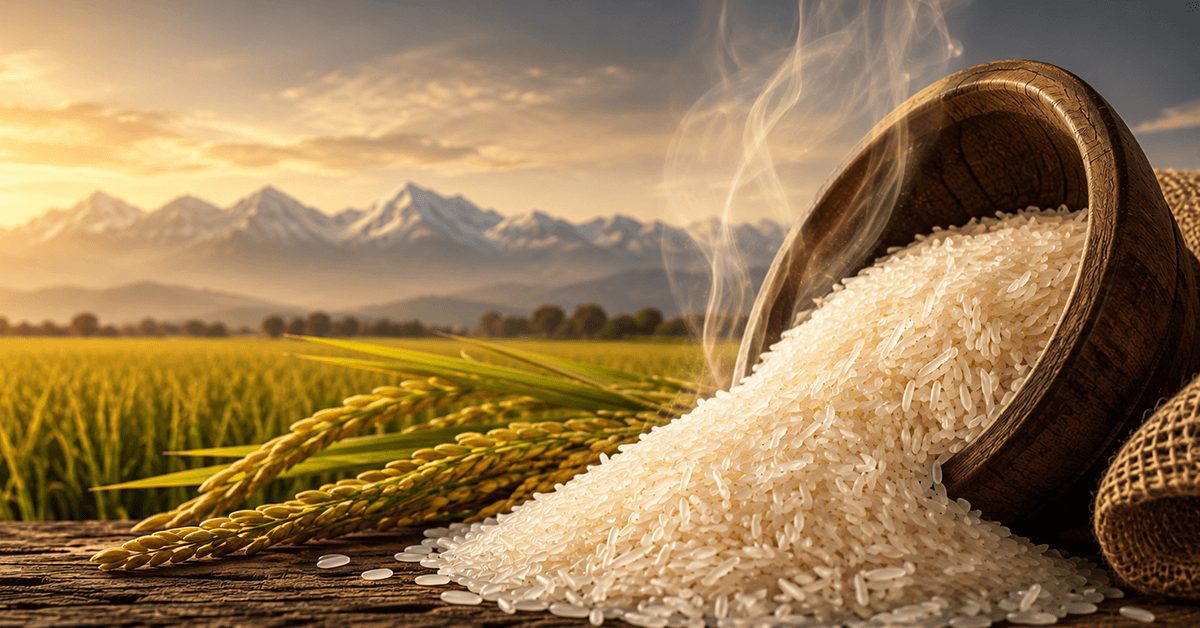
One of the first things you’ll notice when cooking Veer Overseas Basmati Rice is its unmistakable aroma. Whether you’re preparing an everyday meal with Veer Rozana Gold Basmati Rice or a celebratory biryani using one of our premium aged Basmati varieties, the kitchen quickly fills with a warm, inviting fragrance that sets Basmati apart from ordinary rice.
But have you ever wondered why Basmati rice smells so different from other varieties?
The answer lies in a fascinating combination of nature, geography, genetics, and careful cultivation.
What Makes Basmati Rice So Aromatic?
Unlike ordinary rice, Basmati rice naturally contains higher levels of a compound called 2-Acetyl-1-Pyrroline (2AP).
While the name may sound scientific, it’s this naturally occurring compound that gives Basmati rice its distinctive fragrance. The aroma is often described as:
- Nutty
- Floral
- Popcorn-like
- Warm and inviting
This compound is present naturally in Basmati rice, making its fragrance one of its most defining characteristics.
It’s All in the Genetics
The unique aroma of Basmati rice isn’t created during processing or packaging—it’s inherited.
Basmati varieties possess specific genetic traits that allow them to produce higher levels of aromatic compounds than most other rice varieties. This is one of the reasons authentic Basmati rice stands apart from ordinary long-grain rice.
Simply put, genuine Basmati is naturally fragrant by design.
The Role of the Himalayan Foothills
Not every region can grow authentic Basmati rice.
Traditional Basmati is cultivated in the fertile plains surrounding the Himalayan foothills, where a unique combination of climate, soil, and water creates ideal growing conditions.
These factors play an important role in developing the rice’s:
- Natural aroma
- Long grain structure
- Delicate texture
- Overall quality
This geographical advantage is one reason Indian Basmati rice is renowned worldwide.
Why Ageing Enhances the Aroma
Premium Basmati rice is often naturally aged before it reaches consumers.
During the ageing process, moisture levels gradually reduce, allowing the grains to mature. As a result, the characteristic aroma becomes richer and more pronounced, while the rice also develops better cooking performance.
This is why premium aged Basmati rice, such as the carefully matured varieties offered by Veer Overseas, is preferred by chefs, restaurants, and discerning home cooks who seek exceptional aroma, superior grain elongation, and a truly authentic dining experience.
Does Cooking Bring Out the Aroma?
Absolutely.
When Basmati rice is cooked, heat releases the aromatic compounds trapped within the grains, filling the kitchen with its signature fragrance.
Simple cooking practices can help preserve and enhance this aroma:
- Rinse the rice gently to remove excess surface starch without over-washing.
- Soak the rice for 20–30 minutes before cooking.
- Use the correct water-to-rice ratio.
- Avoid overcooking, which can affect both texture and aroma.
Proper cooking ensures you experience the full character of premium Basmati rice.
Why Doesn’t Every Rice Smell the Same?
Different rice varieties have different genetic characteristics and chemical compositions.
While many varieties offer pleasant flavours and textures, most do not naturally produce the same concentration of aromatic compounds found in Basmati rice.
That’s why Basmati is instantly recognisable—not just by its long grains, but also by its distinctive fragrance.
Does Aroma Indicate Quality?
A pleasant natural aroma is one of the strongest indicators of premium-quality Basmati rice.
High-quality Basmati typically offers:
- A naturally fragrant scent before cooking
- A richer aroma during cooking
- Long, slender grains
- Excellent grain elongation
- Fluffy, separate texture after cooking
However, aroma should always be considered alongside other quality factors such as grain consistency, purity, and sourcing.
Why Aroma Matters in Cooking
The fragrance of authentic Basmati rice beautifully complements rich spices, herbs, and slow-cooked gravies, making Veer Supreme Basmati Rice and Veer Rozana Gold Basmati Rice ideal choices for dishes such as:
- Biryani
- Pulao
- Jeera Rice
- Fried Rice
- Saffron Rice
- Steamed rice served with curries
Each variety delivers the signature aroma and long-grain texture that elevate everyday meals as well as festive occasions.
Choosing Premium Basmati Rice Makes All the Difference
Not all Basmati rice offers the same level of aroma.
Factors such as cultivation practices, ageing, processing, and quality control all influence the final product. Choosing premium-quality Basmati rice from a trusted manufacturer ensures you enjoy the authentic fragrance, texture, and grain quality that Basmati is known for.
At Veer Overseas, our Basmati rice is sourced from the fertile Himalayan foothills and processed with stringent quality standards to preserve its natural aroma and exceptional quality. Every grain reflects our commitment to delivering authentic, premium Basmati rice to homes and businesses around the world.
Final Thoughts
At Veer Overseas, we believe exceptional meals begin with exceptional ingredients. That’s why our range—including Veer Supreme Basmati Rice, Veer Rozana Gold Basmati Rice, and other premium Basmati varieties—is sourced from the fertile Himalayan foothills and processed under stringent quality standards to preserve its natural aroma, purity, and long-grain excellence.
Whether you’re a home cook, retailer, distributor, or foodservice professional, choosing Veer Overseas means experiencing the authentic fragrance and premium quality that have made Indian Basmati rice renowned across the world.